Lobbying on Capitol Hill (October 2019)
 I was brought to Washington DC on Tuesday May 7, 2019. I was there for a very important cause: I was lobbying on behalf of the Eating Disorder Coalition (EDC) for EDC Advocacy Team. I was honored to be a representative for the California Team. I was able to be the voice for many that are not able to be that voice. I did this for my clients, their loved ones and anyone who has been impacted by an eating disorder.
Some facts about eating disorders: The research shows that eating disorders ARE treatable. Eating disorders can be successfully and fully treated; unfortunately one about one-third of people with an eating disorder ever receive treatment.1 Also among adolescents with an eating disorder, fewer than 1 in 5 have received treatment.2
 Insurance does not adequately cover eating disorder treatment. According to a survey of 109 specialist, representing nearly every inpatient eating disorders program in the United States: 3
1 in 5 eating disorder specialists believe that insurance companies are indirectly responsible for the death of at least one of their patients. Also 96.7 % of eating disorder specialists believe their patients with anorexia nervosa are put in life threatening situations because of health insurance companies’ refusal to cover treatment. It is also known that TRICARE provides healthcare coverage for over 9.5 million active duty service members and their families.4 Unfortunately; TRICARE restricts access to needed treatment, denying coverage for treatment at free standing eating disorder centers.
When I was meeting at the offices of: Senator Dianne Feinstein (D-CA), Representative Gil Ciscernos (D-CA-39), Representative Ted Lieu (D-CA-33) and Representative Jackie Speier (D-CA-14) I was able to share the following information: Eating disorders affect 30M Americans during their lifetime, and have one of the highest mortality rates of any psychiatric illness. Eating disorders affect all ages, genders and bodies. They affect everyone; specifically, 3-4% of the Medicare population and 3% of males and 6% of females in the Social Security Disability Insurance (SSDI). Without comprehensive treatment, individuals risk co-occurring illnesses, and the Medicare system risks significant costs through ER visits and inpatient treatment when left untreated.
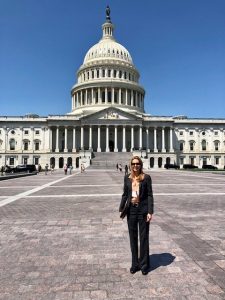 EDC Capitol Hill Advocacy Day was advocating for two legislative initiatives: (1) The Nutrition Counseling Aiding Recovery for Eating Disorders Act (Nutrition CARE Act) and (2) Affordable Care Act (ACA) Protection and Stabilization.
Nutrition CARE Act:
The EDC developed and is leading the introduction of the new Nutrition Counseling Aiding Recovery for Eating Disorders Act (Nutrition CARE Act)—with an expected House of Representatives introduction on or before EDC Capitol Hill Advocacy Day. This legislation will add medical nutrition therapy (nutrition counseling) coverage for outpatient eating disorders treatment under Medicare. EDC Capitol Hill Advocacy Day did advocate for co-sponsorship of the House of Representatives legislation and introduction/leadership of corresponding Senate legislation.
There are 4 pillars of comprehensive treatment: medical, psychiatric, therapy and nutrition counseling. Medicare only covers 3 of the 4 for outpatient care by excluding nutrition counseling. This is what I was lobbying for. Nutrition CARE Act modifies the Medicare benefit design to cover eating disorders nutrition counseling which is equal to diabetes mellitus and renal failure. We urged congress to protect the Affordable Care Act (ACA) provisions: protections for people with pre-existing conditions, specifically comprehensive mental health and substance use order coverage, no annual/lifetime limits on benefits & maximums on out of pocket expenses.
I was able to share my story regarding the reason I selected to be an eating disorder professional. This was such a wonderful experience to share my lived experience and make a difference for all. Thank you for this wonderful opportunity and encourage everyone to lobby for a point that you believe in.
References
- Hudson, J. I., Hiripi, E., Pope, H. G., & Kessler, R.C. (2007). The prevalence and correlates of eating disorders in the national comorbidity survey replication. Biological Psychiatry, 61 (3), 348-358.
- Swanson, S. A., Crow, S. J., Le Grange, D Swendsen, J., & Merikangas, K. R. (2011). Prevalence and correlates of eating disorders in adolescents. Results from the national comorbidity survey replication adolescent supplement. Archives of General Psychiatry, 68 (7), 714-723.
- Anonymous (1999). Glamour magazine exclusively investigates managed-care organizations who refuse treatment for anorexics.
- TRICARE, Defense Health Agency, Military Health System. (2014). Eating disorder treatment. Retrieved from http://tricare.mil/CoveredServices/IsItCovered/EatingDisorderTreatment.aspx