Beyond the trend: the science of hormone syncing diets (July 2026)
If you’ve scrolled through online wellness platforms recently, you have likely encountered a dietary trend promising to calm the physiological storms of a woman’s body: “hormone syncing,” often popularized alongside the practice of “seed cycling.”
Driven largely by women navigating the unpredictable shifts of perimenopause, as well as those meticulously tracking their menstrual cycles, the concept is certainly enticing. The premise is simple and empowering: by eating specific “hormone-balancing” foods at precise times in your cycle, you can naturally regulate your estrogen and progesterone levels, alleviating everything from PMS to menopausal hot flashes.
It’s understandable why women are turning to these protocols. Perimenopause and menstrual irregularities can cause a lot of physical and emotional distress, and historically, women’s health concerns have often been overlooked or met with generic prescriptions. Taking control of your symptoms through diet feels actionable and validating. That said, it’s important to check what the science actually says about all of this. Let’s separate the nutritional facts from the trendy formulas—and correct a few common misconceptions along the way.
Hormone syncing diets operate on the idea that a woman’s nutritional needs fluctuate alongside her hormones.
- During the follicular phase (days 1-14 of a standard cycle), estrogen levels rise, so hormone syncing proponents suggest eating foods that support healthy estrogen production.
- During the luteal phase (days 15-28), progesterone takes center stage, and the dietary focus shifts. For women in perimenopause—where hormone levels can fluctuate erratically before dropping entirely—the focus is usually on the continuous consumption of specific plant compounds to stabilize symptoms.
Central to these diets are three key dietary pillars: soy isoflavones, flaxseeds, and cruciferous vegetables.
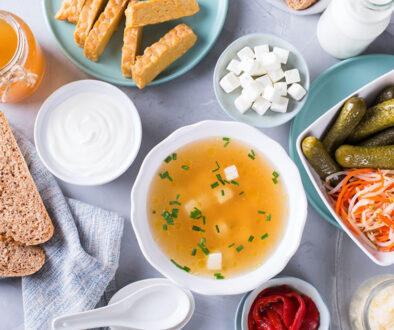
Soy isoflavones. Soy isoflavones, abundant in foods like tofu, tempeh, and edamame, are a primary focus for women entering perimenopause. Isoflavones are a type of phytoestrogen — plant-derived compounds that structurally resemble human estrogen and can bind to estrogen receptors in the body.
The scientific evidence supporting soy isoflavones is actually quite robust. Because they exert a mild estrogenic effect, they can help compensate for the body’s naturally declining estrogen levels during perimenopause. A 2012 systematic review and meta-analysis found that soy isoflavones significantly reduce both the frequency and severity of menopausal hot flashes. Previous research found that soy isoflavones can significantly improve systemic arterial elasticity in perimenopausal and menopausal women, offering vital cardiovascular protection during this transitional phase.
Flaxseeds. Flaxseeds are the stars of the “seed cycling” movement, typically prescribed during the first half of the menstrual cycle. They’re rich in omega-3 fatty acids and lignans, another class of phytoestrogens. The theoretical claim is that flaxseeds help balance estrogen levels—gently boosting it if it is too low, or binding to excess estrogen to facilitate its removal if it is too high.
While the nutritional value of flaxseeds is unquestionable, the strict calendar protocol of “seed cycling” lacks rigorous clinical validation. A 2023 study did find that a combination therapy involving flaxseeds, pumpkin, sesame, and sunflower seeds helped reduce follicle-stimulating hormone (FSH) and luteinizing hormone (LH) in women with polycystic ovary syndrome (PCOS). However, there’s no high-quality, peer-reviewed evidence proving that eating these seeds on a strict 14-day rotation is biologically superior to simply eating them consistently. The benefits come from the continuous supply of lignans and healthy fats, not the exact timing of their ingestion.
Cruciferous vegetables. Cruciferous vegetables—such as broccoli, cauliflower, Brussels sprouts, and kale—are heavily recommended in hormone syncing for their purported ability to “detox” excess hormones. They contain high levels of glucosinolates, which, when digested, break down into active compounds like indole-3-carbinol (I3C) and diindolylmethane (DIM). Research does support the role of cruciferous vegetables in estrogen metabolism. According to pharmacological studies, compounds like I3C and DIM actively influence liver enzymes to help metabolize and safely excrete excess estrogen, helping to maintain a healthy hormonal environment.
The major misconception inherent in claims about hormone syncing is that the human body is a rigid machine that requires perfectly timed inputs to produce a desired output. Trouble is, we’re not robots, and the human endocrine system is highly complex, governed by numerous factors including overall dietary patterns, stress, sleep, and genetics.
The bottom line is that you don’t need to stress over a calendar or force yourself into a strict 14-day dietary rotation to see benefits. The foods championed by these diets—soy, flaxseeds, and cruciferous vegetables—are nutritional powerhouses. They can support your body in navigating perimenopause and cyclical fluctuations. Simply incorporating these foods into a balanced diet will offer you benefits without the unnecessary mental gymnastics.
References:
Taku K, Melby MK, Kronenberg F, Kurzer MS, Messina M. Extracted or synthesized soybean isoflavones reduce menopausal hot flash frequency and severity: Systematic review and meta-analysis of randomized controlled trials. Menopause. 2012 Jul;19(7):776-790. https://experts.llu.edu/en/publications/extracted-or-synthesized-soybean-isoflavones-reduce-menopausal-ho-2/
Nestel PJ, Yamashita T, Sasahara T, et al. Soy isoflavones improve systemic arterial compliance but not plasma lipids in menopausal and perimenopausal women. Arterioscler Thromb Vasc Biol. 1997 Dec;17(12):3392-8. https://www.ahajournals.org/doi/10.1161/01.ATV.17.12.3392#
Rasheed N, Ahmed A, Nosheen F, et al. Effectiveness of combined seeds (pumpkin, sunflower, sesame, flaxseed): As adjacent therapy to treat polycystic ovary syndrome in females. Food Sci Nutr. 2023 Mar 25;11(6):3385-3393. https://pmc.ncbi.nlm.nih.gov/articles/PMC10261760/
Higdon JV, Delage B, Williams DE, Dashwood RH. Cruciferous vegetables and human cancer risk: epidemiologic evidence and mechanistic basis. Pharmacol Res. 2007 Mar;55(3):224-36. https://pmc.ncbi.nlm.nih.gov/articles/PMC2737735/